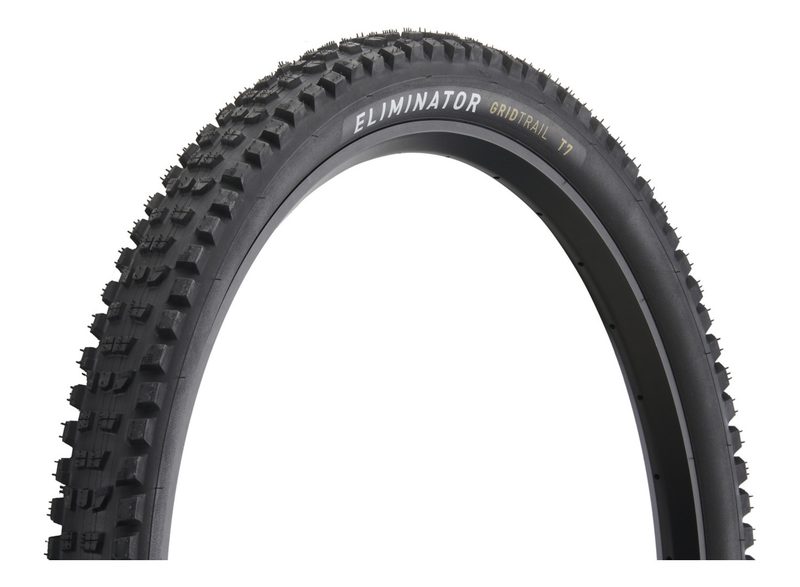
Specialized
Eliminator
E-MTB
Trail
Rear
Intermediate
Lab data
- Weight
- 1010 g
- Price
- from €59
- Grip
- 7.8/10
- Rolling
- 6.6/10
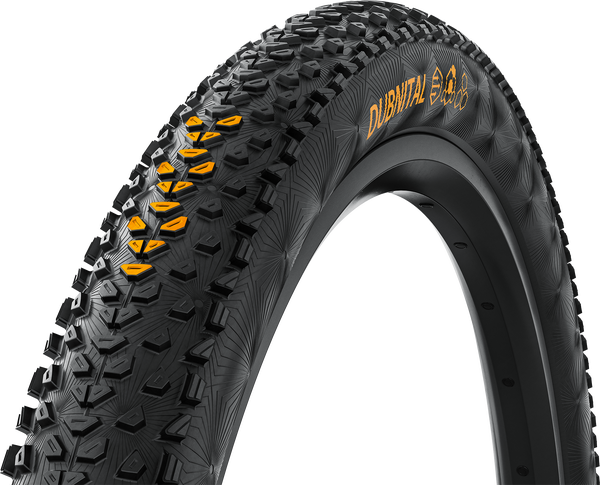
Image: manufacturer · Source
Continental
Tested
Mid-field
22.3 W · rank 2 of 5 comparable Trail tires
1.8 W behind the best value in the same test series. Fewer watts is better – every watt saved stays in the drivetrain.
Schnell rollender Trail-Reifen mit solider Gummidicke.
Width, casing, compound and pressure – every value on this page follows your pick.
Width, casing and compound decide how a tire really rides. We only show what was actually measured – and label estimates honestly.
Reference: recommended pressure 24 psi (1.65 bar) – an assumption, not a test pressure.
More pressure: less rolling resistance, less grip, less comfort. Tougher casing: more protection, more weight. Softer compound: more grip, more rolling resistance.
Modelled values are assumptions based on the stated measurement points – not a lab test.
Editorial assessment on a 1–10 scale. Grip index: 8
These grades describe the tire model, not one specific width or compound – no reliable per-version grades exist.
No data
Scores from 1 to 10: higher is better.
Every variant the manufacturer lists, with its own claimed data. Missing values stay blank.
| 27.5" | 2.2" · 55 mm | Trail(Trail) | Rapid | 615 g | E-25 | €71 |
| 27.5" | 2.4" · 60 mm | Trail(Trail) | Rapid | 645 g | E-25 | €71 |
| 29" | 2.2" · 55 mm | Race | Rapid | 610 g | E-25 | €74 |
| 29" | 2.2" · 55 mm | Trail(Trail) | Rapid | 655 g | E-25 | €71 |
| 29" | 2.4" · 60 mm | Race | Rapid | 645 g | E-25 | €74 |
| 29" | 2.4" · 60 mm | Race | Grip | 650 g | E-25 | €71 |
| 29" | 2.4" · 60 mm | Trail(Trail) | Rapid | 690 g | E-25 | €71 |
| 29" | 2.4" · 60 mm | Trail(Trail) | Grip | 725 g | E-25 | €67 |
The value in brackets is our brand-neutral casing class (Light, Trail, Enduro, Downhill) – not a manufacturer statement.
Real test-rig values – not an estimate. Tested variant: Dubnital Trail Rapid 2.4 (gemessene Variante).
Watts measured on the test rig: lower is better. The 1-10 ratings on this page: higher is better.
No lab of our own: measurements come from the third-party test named above – the source is linked directly.
Rank 2 of 5 · lower is better
Rank 2 of 4 · higher is better
Best value · Rank 1 of 5 · lower is better
Test series: Bicycle Rolling Resistance – MTB-Messreihe
Measured values per compound and casing from the same laboratory test. Empty cells mean no reliable value was published.
| Dubnital Race Grip 2.4 | 29 x 2.40 | 26.5 W | 71 | 41 | – | 56 mm | 664 g | – |
| Dubnital Race Rapid 2.2 | 29 x 2.20 | 20.2 W | 69 | 44 | – | 52 mm | 609 g | – |
| Dubnital Race Rapid 2.4 | 29 x 2.40 | 20.6 W | 70 | 40 | – | 56 mm | 635 g | – |
| Dubnital Trail Rapid 2.4 | 29 x 2.40 | 22.3 W | 70 | 42 | – | 56 mm | 691 g | – |
Wet grip is measured in the lab on a hard wet surface – it is not off-road grip.
lower is better
Up to three versions at once: the curve is modelled rolling resistance across pressure, the dot is the real lab measurement. Click the legend to show or hide a version.
The curve shape is a physics model, not a measurement. Labs do not measure grip across pressure – we do not invent that curve. Wet grip is a lab value per tire model, not per version.
Three curves at most – hide one first.
Hardness steps are our classification based on manufacturer information. All numbers come from lab tests; sources are linked on the tire pages. All information without warranty.
Tested: Calculated from the stored measurements – compared only within the same test series and category (Trail).
Mid-field
22.3 W · rank 2 of 5 comparable Trail tires
1.8 W behind the best value in the same test series. Fewer watts is better – every watt saved stays in the drivetrain.
Mid-field
70 points · rank 2 of 4 comparable Trail tires
1 points behind the best value in the same test series. More points means more compound grip on smooth surfaces.
Strong in comparison
691 g · rank 1 of 5 comparable Trail tires
Best value in this test series. Fewer grams is better, but usually costs casing stability.
Measurements from different test rigs are not directly comparable – Sources & method.
Specialized
Schwalbe
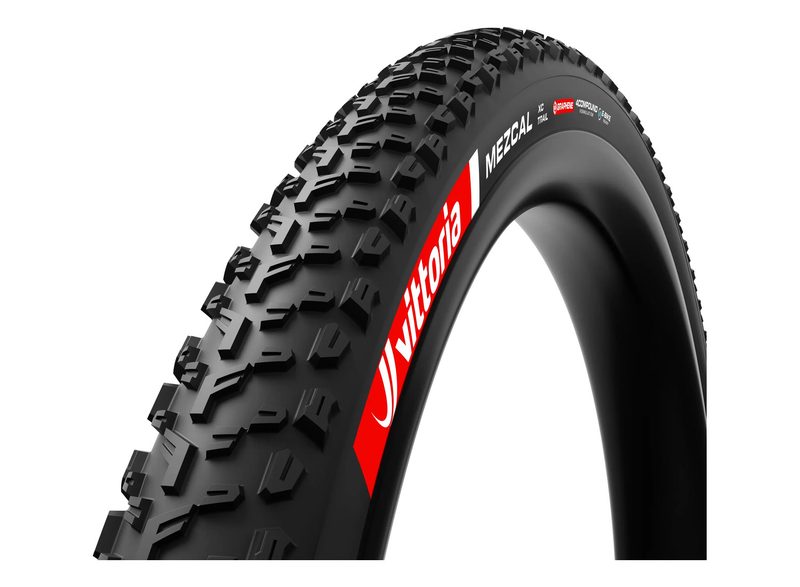
Vittoria