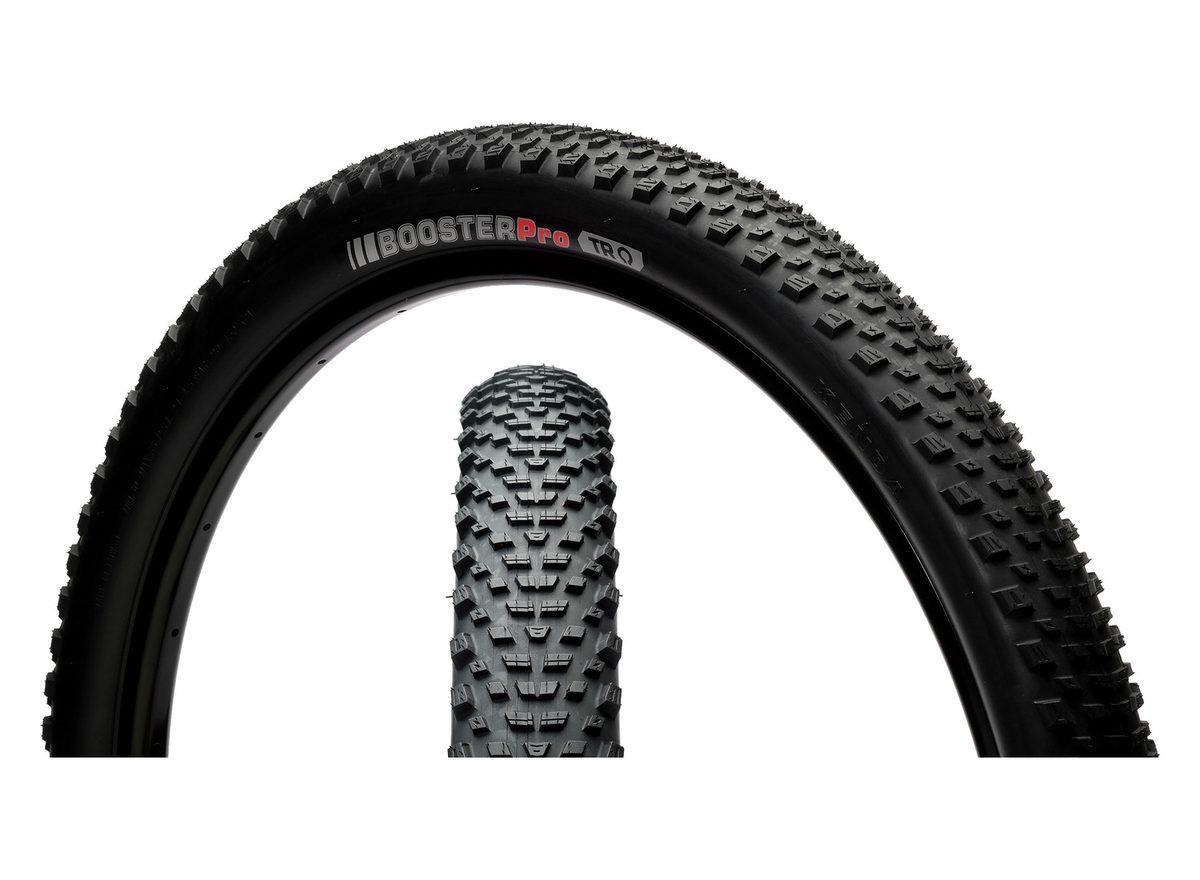
Image: manufacturer · Source
Kenda
Booster Pro
XC
Front+Rear
Intermediate
Tubeless ready
Short answer:
Tested
Weaker in comparison
35.3 W · rank 20 of 20 comparable XC tires
18.6 W behind the best value in the same test series. Fewer watts is better – every watt saved stays in the drivetrain.
XC-Reifen von Kenda mit dichtem Profil.
- Weight
- 739 g
- Variant
- –
- Compound
- RSR
- Grip class
- Speed-Grip
- Casing
- SCT
- TPI
- –
- Reinforcement
- –
- Wheel sizes
- 29", 27.5"
- Widths
- 2.4"
- Front pressure
- 20–26 psi (1.38–1.79 bar)
- Rear pressure
- 22–28 psi (1.52–1.93 bar)
- Price (MSRP)
- 49–65 €
- Model year
- 2025
Configure your build
Width, casing, compound and pressure – every value on this page follows your pick.
Measured value available
How we calculate
Width, casing and compound decide how a tire really rides. We only show what was actually measured – and label estimates honestly.
Reference: recommended pressure 24 psi (1.65 bar) – an assumption, not a test pressure.
More pressure: less rolling resistance, less grip, less comfort. Tougher casing: more protection, more weight. Softer compound: more grip, more rolling resistance.
Modelled values are assumptions based on the stated measurement points – not a lab test.
Rating profile
3 of 8 criteria ratedEditorial assessment on a 1–10 scale. Grip index: 6.9
TestedYour build – derived
These grades describe the tire model, not one specific width or compound – no reliable per-version grades exist.
Individual scores
- Rolling resistance3.4/10
- Wet grip6.9/10
- Puncture protection3.4/10
No data
- Dry grip
- Cornering grip
- Braking traction
- Durability
- Comfort/damping
Scores from 1 to 10: higher is better.
Sizes & variants
Every variant the manufacturer lists, with its own claimed data. Missing values stay blank.
| 27.5" | 2.2" · 56 mm | TR | Single | 551 g | ||
| 27.5" | 2.2" · 56 mm | SCT | Single | 619 g | ||
| 27.5" | 2.4" · 61 mm | TR | Single | 598 g | ||
| 27.5" | 2.4" · 61 mm | SCT | Single | 666 g | ||
| 27.5" | 2.6" · 66 mm | TR | Single | 641 g | ||
| 27.5" | 2.6" · 66 mm | SCT | Single | 721 g | ||
| 27.5" | 2.8" · 71 mm | TR | Single | 710 g | ||
| 27.5" | 2.8" · 71 mm | SCT | Single | 814 g | ||
| 29" | 2.2" · 56 mm | TR | Single | 589 g | ||
| 29" | 2.2" · 56 mm | SCT | Single | 670 g | ||
| 29" | 2.4" · 61 mm | TR | Single | 624 g | ||
| 29" | 2.4" · 61 mm | SCT | Single | 690 g | ||
| 29" | 2.4" · 61 mm | SCT CSK | Single | 725 g | ||
| 29" | 2.6" · 66 mm | TR | Single | 681 g | ||
| 29" | 2.6" · 66 mm | SCT | Single | 763 g |
The value in brackets is our brand-neutral casing class (Light, Trail, Enduro, Downhill) – not a manufacturer statement.
Measured values
Lab data
Real test-rig values – not an estimate. Tested variant: Booster Pro SCT 2.4 (gemessene Variante).
Watts measured on the test rig: lower is better. The 1-10 ratings on this page: higher is better.
No lab of our own: measurements come from the third-party test named above – the source is linked directly.
- Rolling resistancemeasured at 28 psi (1.93 bar)
- 35.3 W
- Impact protection tread
- 30 points
- Wet grip measurementHard surface, not off-road
- 67 points
- Tread rubber thickness
- 2.1 mm
- Weighed weight
- 739 g
- Measured widthon a 17.8 mm rim
- 56 mm
Rank 20 of 20 · lower is better
Rank 7 of 20 · higher is better
Rank 13 of 20 · lower is better
Source: Bicycle Rolling Resistance · January 2026To the test
Automatic assessment
Tested: Calculated from the stored measurements – compared only within the same test series and category (XC).
- Rolling resistance
Weaker in comparison
35.3 W · rank 20 of 20 comparable XC tires
18.6 W behind the best value in the same test series. Fewer watts is better – every watt saved stays in the drivetrain.
- Wet grip measurement
Mid-field
67 points · rank 7 of 20 comparable XC tires
5 points behind the best value in the same test series. More points means more compound grip on smooth surfaces.
- Weighed weight
Mid-field
739 g · rank 13 of 20 comparable XC tires
147 g behind the best value in the same test series. Fewer grams is better, but usually costs casing stability.
Measurements from different test rigs are not directly comparable – Sources & method.
Similar tires
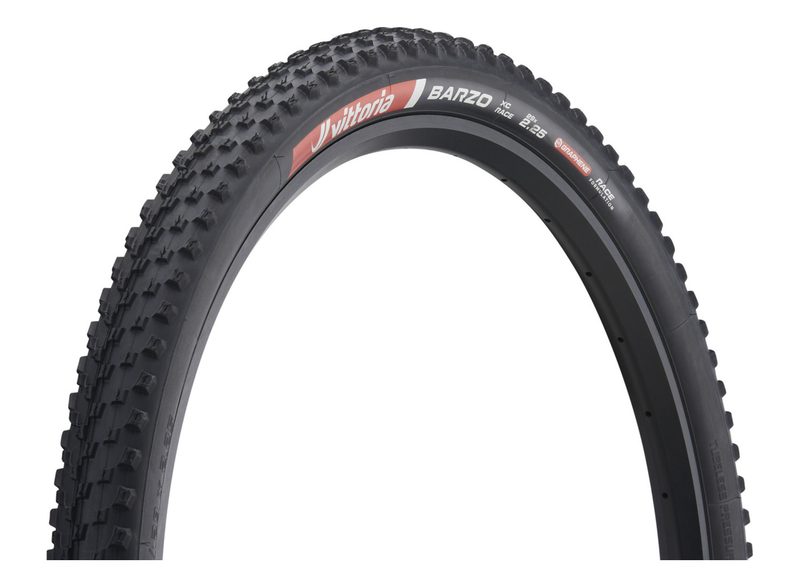
Vittoria
Barzo XC Race
XC
Front+Rear
Intermediate
Lab data
- Weight
- 747 g
- Price
- from €59
- Grip
- 6.9/10
- Rolling
- 6.3/10