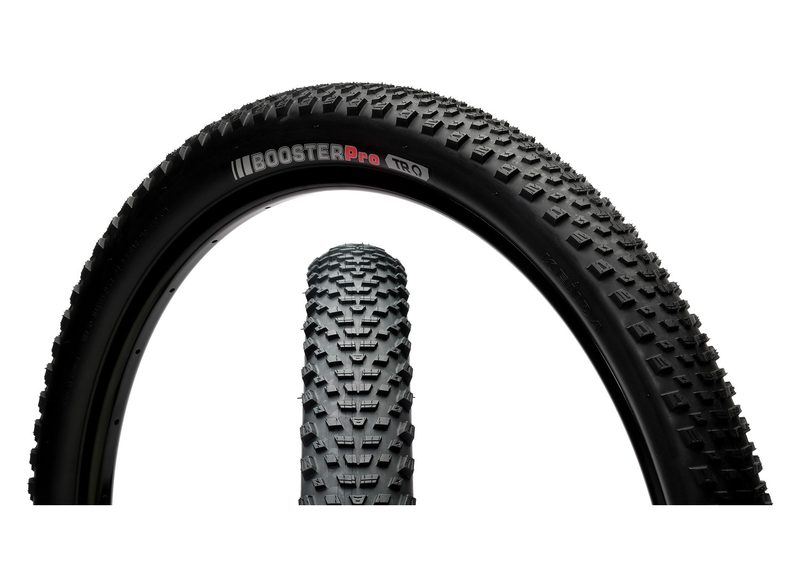
Kenda Booster Pro
XC
Front+Rear
Short answer: Rolling resistance: Maxxis Aspen ST leads with 26.7 W, Kenda Booster Pro trails by 8.6 W.
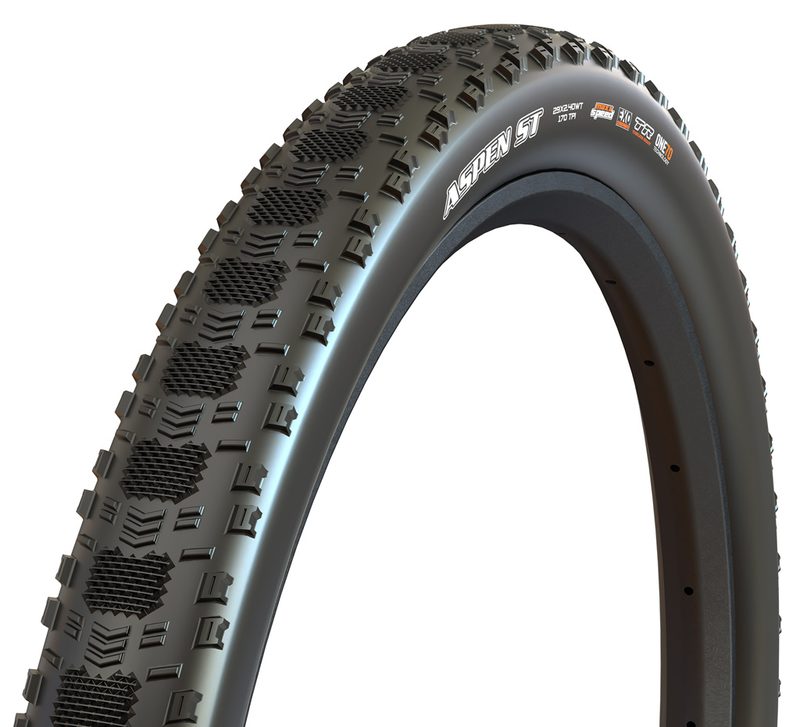
Width, casing, compound and pressure – every value on this page follows your pick.
Kenda Booster Pro
Maxxis Aspen ST
Width, casing and compound decide how a tire really rides. We only show what was actually measured – and label estimates honestly.
Kenda Booster Pro: Reference: recommended pressure 24 psi (1.65 bar) – an assumption, not a test pressure.
Maxxis Aspen ST: Reference: recommended pressure 24 psi (1.65 bar) – an assumption, not a test pressure.
More pressure: less rolling resistance, less grip, less comfort. Tougher casing: more protection, more weight. Softer compound: more grip, more rolling resistance.
Modelled values are assumptions based on the stated measurement points – not a lab test.
| Kenda Booster Pro | Maxxis Aspen ST | |
|---|---|---|
| Width | 2.4" (61 mm) | 2.4" (61 mm) |
| Wheel sizes | 29" · 27.5" | 29" · 27.5" |
| Weight | 739 g | 699 g |
| Casing | SCT | EXO |
| Casing | – | Trail |
| TPI | – | – |
| Tread type | Intermediate | Intermediate |
| Tubeless ready | yes | yes |
| E-MTB approval | no | no |
| Price from | €49 | €64 |
| Model year | 2025 | 2024 |
Hardness scale 1 = hard and fast to 5 = very soft and grippy (our own classification).
Both tires sit in the same grip class – the watt comparison is fair.
Both tires sit on the same step of our editorial hardness scale.
| Kenda Booster Pro | Maxxis Aspen ST | |
|---|---|---|
| Rolling resistance (W) | 35.3 W | 26.7 W |
| Wet grip measurement (points) | 67.0 points | 65.0 points |
| Weighed weight (g) | 739.0 g | 699.0 g |
Up to three versions at once: the curve is modelled rolling resistance across pressure, the dot is the real lab measurement. Click the legend to show or hide a version.
The curve shape is a physics model, not a measurement. Labs do not measure grip across pressure – we do not invent that curve. Wet grip is a lab value per tire model, not per version.
Every measured variant of the selected tires – the same model in another compound, width or casing sits right next to it. Empty fields mean no reliable measurement.
| Kenda Booster ProBooster Pro SCT 2.4 | 35.3 W | – | 739 g |
| Maxxis Aspen STAspen ST MaxxSpeed EXO/TR Team Spec 2.4 | 26.7 W | – | 699 g |
No values are available for this selection.
Tested
No test references are on file for these two tires yet.